
How Often Should Adults Have Their Hearing Tested?
Most adults know they should have their eyes checked regularly.
They know they should monitor their blood pressure, visit the dentist, and keep up with routine health screenings.
Hearing often gets treated differently.
Many people do not schedule their first hearing test until communication has already become noticeably difficult.
They wait until the television is extremely loud, restaurants are frustrating, family members are complaining, or conversations have become exhausting.
But hearing does not need to reach that point before it deserves attention.
Regular hearing testing can provide a baseline, identify changes over time, and help you understand what is happening before communication becomes significantly affected.
Why Get a Hearing Test When You Think You Hear Fine?
A hearing test is not only for people who already know they have hearing loss.
One of the biggest benefits of having your hearing tested while you believe it is normal is establishing a baseline hearing test.
A baseline gives you a record of how well you hear at a particular point in time.
If your hearing changes several years later, future results can be compared with your earlier test.
That allows a hearing professional to see not just where your hearing is today, but how it has changed.
Without a baseline, there is nothing to compare against.
How Often Should Adults Get Their Hearing Checked?
There is not one testing schedule that is appropriate for every adult.
Age, noise exposure, existing hearing loss, medical history, medications, occupation, and communication symptoms can all influence how frequently hearing should be monitored.
For many adults, particularly as they get older, discussing routine hearing testing with a hearing care professional can be useful.
If you already have hearing loss or are noticing communication changes, testing may be recommended more frequently.
People with significant occupational or recreational noise exposure may also need closer monitoring.
The key is not to wait for hearing to become severe before checking it.
Why Hearing Testing Becomes More Important With Age
Age-related hearing changes are common.
They also tend to develop gradually.
That combination makes hearing loss particularly easy to overlook.
A person may compensate for years by turning up the television, relying more heavily on visual cues, or avoiding difficult listening environments.
Because each change happens slowly, there may never be one moment when the person realizes, “My hearing is different.”
Regular testing can identify changes that would otherwise remain hidden.
What Counts as a Change Worth Testing?
You should not necessarily wait for a routine interval if you notice new communication difficulties.
Consider scheduling a hearing evaluation if you begin experiencing:
- Increased television or radio volume
- Frequent requests for repetition
- Difficulty understanding speech in restaurants
- Trouble following group conversations
- Difficulty hearing women or children
- A feeling that everyone is mumbling
- Difficulty hearing on the phone
- Increased listening fatigue
- Family members commenting on your hearing
- New or persistent tinnitus
- A noticeable change in one ear
Sudden hearing changes, particularly sudden hearing loss in one or both ears, should be addressed promptly rather than waiting for a routine screening.
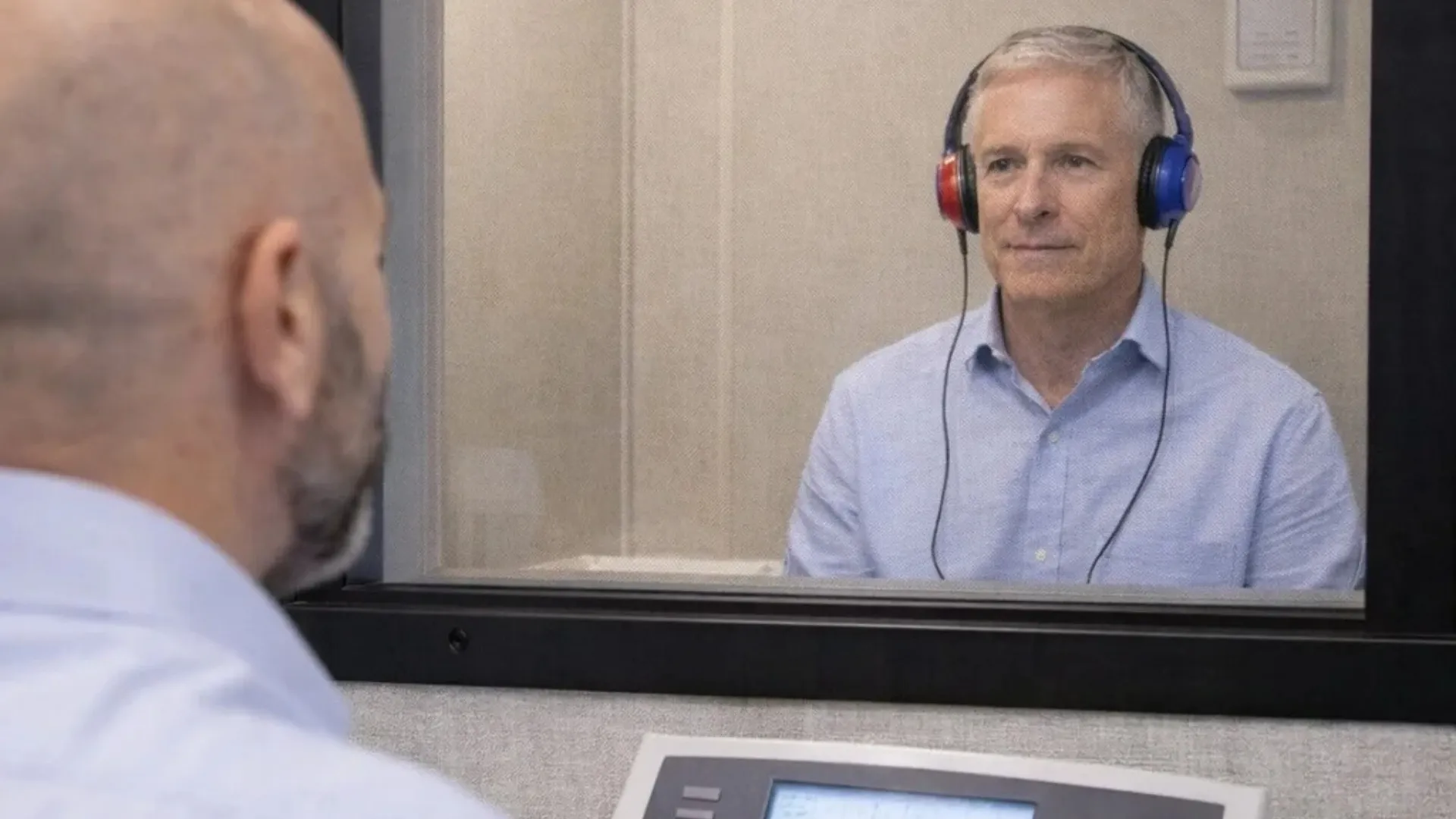
What Happens During a Hearing Evaluation?
A professional hearing evaluation typically involves more than simply determining whether you can hear a beep.
Your hearing professional may discuss your medical and hearing history, ask about communication difficulties, examine your ears, and perform testing across different frequencies.
Depending on the evaluation, speech testing may also be used to assess how well you recognize or understand words.
The resulting audiogram provides a visual representation of your hearing ability across frequencies.
This allows your provider to determine whether hearing loss is present and identify its pattern and severity.
Hearing Can Change Before You Realize It
One reason routine testing is valuable is that hearing changes do not always feel dramatic.
You may still carry on conversations.
You may still hear the television.
You may still answer the phone.
The difference may be how much effort those activities require.
Perhaps you need people to face you.
Maybe you struggle when several people talk at once.
Maybe restaurants have become tiring.
These smaller changes can develop long before someone considers themselves to have “bad hearing.”
Early Identification Gives You More Information
Finding hearing loss does not automatically mean you have to begin wearing hearing aids immediately.
The appropriate next step depends on your hearing results, communication difficulties, lifestyle, and professional recommendations.
Testing simply gives you information.
If a small change is identified, your hearing can be monitored.
If hearing loss is affecting communication, your provider can discuss available options.
If everything is normal, you leave with reassurance and a baseline for the future.
There is very little downside to knowing where your hearing stands.
Who May Need More Frequent Hearing Testing?
Certain adults may benefit from closer monitoring.
That can include people who:
- Already have diagnosed hearing loss
- Regularly work around loud equipment or machinery
- Frequently attend loud concerts or recreational events
- Use firearms or other high-noise equipment
- Have noticed tinnitus or communication changes
- Take medications that may affect hearing
- Have been advised by a healthcare professional to monitor hearing
Your hearing care provider can recommend an appropriate testing schedule based on your individual circumstances.
Frequently Asked Questions
At what age should adults start getting hearing tests?
There is no single age that applies to everyone. Establishing a baseline in adulthood can be helpful, and regular monitoring becomes increasingly valuable as hearing changes become more common with age.
How often should adults over 60 have their hearing checked?
Testing frequency should be individualized. Many adults benefit from regular hearing monitoring as they age, particularly if they have risk factors or notice communication changes. A hearing professional can recommend an appropriate interval.
Should I get a hearing test even if I hear fine?
Yes, there can still be value in establishing a baseline. It gives future hearing tests something to compare with and may identify subtle changes you have not noticed.
What if my hearing suddenly changes?
Sudden or rapid hearing changes should not wait for a routine hearing test schedule. Seek prompt medical or hearing healthcare evaluation.
Does a hearing test mean I will need hearing aids?
No. Hearing testing simply determines your hearing status. Recommendations depend on the results and how hearing is affecting your life.
Do Not Wait Until Hearing Loss Feels Severe
There is a major difference between checking your hearing and waiting until you cannot ignore it anymore.
Regular hearing evaluations can establish a baseline, track changes, and identify potential problems before communication becomes significantly more difficult.
If it has been years since your last hearing test, or you have never had one at all, consider making hearing part of your routine health care.
Your hearing changes gradually.
Your approach to monitoring it can be proactive.
Back to Blog